
πŸ“ž Call for a Free Quote: 772-263-8047

Aluminum Railings in Lakeland, FL

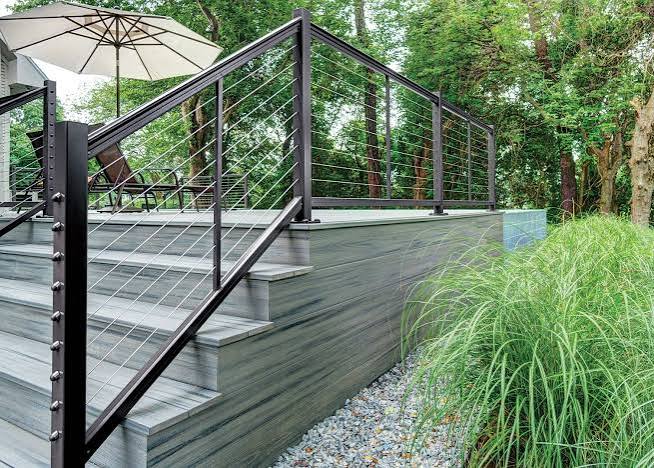
Aluminum cable railing on a deck staircase in Lakeland, FL

Beyond full perimeter fencing, we install aluminum and stainless cable railing systems for decks, elevated porches, pool decks, and exterior steps β€” anywhere Florida building code requires a guard rail or a homeowner wants a modern, open railing that doesn't block a view. Aluminum posts and rails resist the corrosion that steel or lower-grade metal railings develop quickly in Florida's humidity and, near the coast, salt air.

Cable railing β€” horizontal stainless steel cables run through aluminum posts β€” has become a popular choice for newer decks and pool areas because it keeps sightlines nearly unobstructed while still meeting code guard-height and baluster-spacing requirements. It pairs well with composite or elevated decking and gives a noticeably more modern look than traditional picket railing.

We size and space posts, rails, and cable runs to meet Florida building code load requirements for the application (deck versus stair versus pool deck), and we can match railing finish to an existing aluminum fence for a consistent look across the property. Call for a free quote.

πŸ“ž Call 772-263-8047

Request This Service

* Indicates required field

Cable Railing for Decks & Pool Areas

Stainless cable railing is one of our most requested upgrades for pool decks and elevated porches β€” it meets Florida's guard-rail code while keeping the view open, and stainless cable holds up well to pool chemicals and humidity that would corrode lower-grade hardware. The near-invisible sightline is a big part of the appeal for pool areas specifically, where a solid or heavily-balustered railing would block the view of the water or yard beyond it.

Cable vs. Traditional Picket Railing

Traditional aluminum picket railing gives a more classic look and typically costs less than cable, since cable systems require tensioning hardware at each post and periodic re-tensioning as the cables settle over the first year or two. Cable railing costs more but delivers a noticeably more open, modern sightline that's become the standard choice for newer deck and pool builds. Homeowners renovating an older deck often choose picket to match existing railing elsewhere on the property, while new construction and full pool-deck rebuilds lean toward cable for the updated look.

How Railing Installation Works

We anchor posts to the deck, stair stringer, or pool deck surface using hardware rated for the substrate β€” wood framing, concrete, or composite decking each call for different fasteners and blocking. For cable railing, cables run through drilled holes in the posts and get tensioned individually with a swaging or turnbuckle system, checked for even tension across the full run. For picket railing, balusters are spaced to meet code before rails are capped off. Either system typically installs in a day or two for a standard residential deck, longer for a full-perimeter pool deck.

Code-Compliant Guard Heights

Florida building code sets minimum guard rail heights and maximum baluster or cable spacing for elevated walking surfaces, and the requirements differ slightly between a standard deck, a stairway, and a pool deck. We build every railing installation to meet those specs for the specific application β€” deck, stair, or pool deck β€” rather than a one-size-fits-all height, and where a permit or inspection is required for the project, we build to pass it the first time.

Maintenance & Corrosion Resistance

Aluminum posts and rails resist the corrosion that steel or lower-grade metal railings develop quickly in Florida's humidity and, near the coast, salt air, and stainless cable is chosen specifically because standard steel cable would rust in a pool or coastal environment within a season or two. Maintenance is minimal β€” an occasional rinse and, for cable systems, checking tension once a year as the cables naturally settle slightly over time.

What Affects Railing Cost

Linear footage of railing, whether you choose cable or picket, and the complexity of the installation (a straight deck run versus a stair with multiple angle changes) are the main pricing factors. Matching an existing aluminum fence finish on the property adds a small amount for color coordination but keeps the whole property looking consistent rather than mismatched.

New Construction vs. Retrofit Installs

Railing on a brand-new deck or pool build tends to go faster since posts can be planned into the framing or deck surface from the start, with blocking added exactly where the railing needs anchor points. Retrofitting railing onto an existing deck or pool deck sometimes requires additional blocking or a different anchoring approach if the original structure wasn't built with a railing system's load requirements in mind, and we'll flag that during the estimate rather than discovering it mid-installation.

Grab Rails & Accessibility Add-Ons

Beyond code-required guard railing, we install standalone grab rails and handrails for steps and ramps where a homeowner wants added stability, whether for aging in place, a temporary mobility need, or simply a safer grip on outdoor stairs during Florida's frequent rain. These can be added as part of a larger railing project or as a standalone job on existing steps that never had a rail at all.

What Affects Timeline From Quote to Completion

Most residential railing jobs move from signed estimate to completed install within a week or two, faster than a full fence project since railing typically covers less linear footage. Cable railing systems take a bit longer to complete than picket because of the individual tensioning step, and any job requiring a permit or inspection for guard-height compliance adds time for that approval before the final walkthrough.

Railing for Salt-Air & Coastal-Adjacent Conditions

While Lakeland itself is inland, aluminum's corrosion resistance is part of why it's the standard railing material even away from the coast β€” everyday humidity alone is enough to rust standard steel hardware within a couple of years. For homeowners with a pool deck or elevated porch that sees near-constant moisture exposure from pool chemicals or sprinkler overspray, we specify the same corrosion-resistant hardware we'd use on a coastal property, since that moisture exposure stresses fasteners in a similar way.

A Common Railing Mistake We Fix

The most frequent issue we see on other companies' railing installs is posts anchored without enough blocking or embedment for the load the railing needs to carry, which shows up as a wobbly rail that technically meets code height but fails a hard lean test. We anchor every post to the substrate with hardware rated for that specific application, whether it's lag-bolted into solid wood framing, epoxy-anchored into concrete, or through-bolted where the structure allows it.

Matching Railing to an Existing Aluminum Fence

For properties that already have an aluminum fence, we can match the railing's finish and post style so the deck, pool area, and fence line all read as one coordinated system rather than mismatched materials from different eras of the property's history. This is a common request when a homeowner adds a pool or elevated deck to a property with fencing already in place.

Areas We Serve

Proudly providing fence installation across the region:

Get Aluminum Railings in Lakeland Today

Fast response, upfront pricing, and friendly local pros. Call now for a free quote.

πŸ“ž Call 772-263-8047